We deliver lunar payloads reliably & affordably.

OrbitBeyond’s lunar services are based on an extensible engineering platform, enabling commercial and scientific delivery at an unmatched scale and cost.

This is ORBITBeyond

ORBITBeyond is building the transport and infrastructure to turn lunar landings into sustained presence—starting with a south-polar mission planned for 2029/2030 delivering up to 300 kg to the surface, and a 2031 sample-return in development. We plan to operate on-surface services—Power-as-a-Service (including lunar night survival), Data-as-a-Service (edge processing + storage), 4G/LTE networking, and Mobility-as-a-Service—so customers gain more science per kilogram.

Portfolio

Missions & Projects

Solutions & Services

OB1 / OB2- Capabilities and Planned Services

/01

Lunar Transportation Services

Orbit Beyond plans to deliver up to 300 kg to south-polar sites (2029/2030 window), with precision landing, fast commissioning, and an orbital segment for mapping/relay; a 2031 sample-return mission is in development.

We provide end-to-end mission design, payload AI&T, launch integration, and surface ops, plus standardized data products and post-mission reports—so teams focus on science, not mission plumbing.


/02

Lunar Surface Infrastructure

We plan to offer Power-as-a-Service (night survival), Data-as-a-Service (DaaS) (edge processing, storage, prioritized store-and-forward), 4G/LTE surface networking, and Mobility-as-a-Service (MaaS)—so teams buy outcomes (power, data, meters traversed) rather than bespoke infrastructure.

These services are being qualified on pathfinder missions and designed to scale across campaigns and customers.

/03

Lunar Exploration & Prospecting

Our south-pole campaigns target terrain near permanently shadowed regions (PSRs), collecting illumination/thermal, dust/plume, RF, radiation, regolith mechanics, and mineral maps to refine landing zones and traverses.

We will assess helium-prospective areas, build cross-mission datasets, and develop IP (extraction parameters, sensing/analytics pipelines, surface networking playbooks) that raise TRL and de-risk future resource and sample-return missions.

/04

Lunar Night Survival

In partnership with Tec Masters, Orbit Beyond enables operations through the ~14-day lunar darkness. Our lander sustains ~150 W for survival loads (thermal control, avionics, battery management) while providing ~50 W continuous to payloads—turning short sorties into persistent observatories with unbroken datasets across the full thermal cycle. Night operations unlock unique science (volatile migration, surface thermophysics, dust transport, low-RFI radio) and reduce deep-freeze fatigue, extending asset life and enabling multi-lunation campaigns. At sunrise, systems wake to recalibrate, recharge, and downlink higher-volume data, accelerating discovery across missions. An optional post-night hop can reposition for better terrain/lighting or reconnect with assets, delivering second-site science without a second mission. Result: more science per kilogram and per dollar for NASA and commercial customers—repeatable across any number of missions

BLOG

Introduction As humanity sets its sights on the exploration and colonization of other planets, the concept of in-situ resource utilization (ISRU) has emerged as a crucial strategy to reduce...

PARTNERS

Our Strategic Alliances

Meet the Leadership Team

Lawrence A. Helm

Executive

Jamie Adams

Site Lead /GM

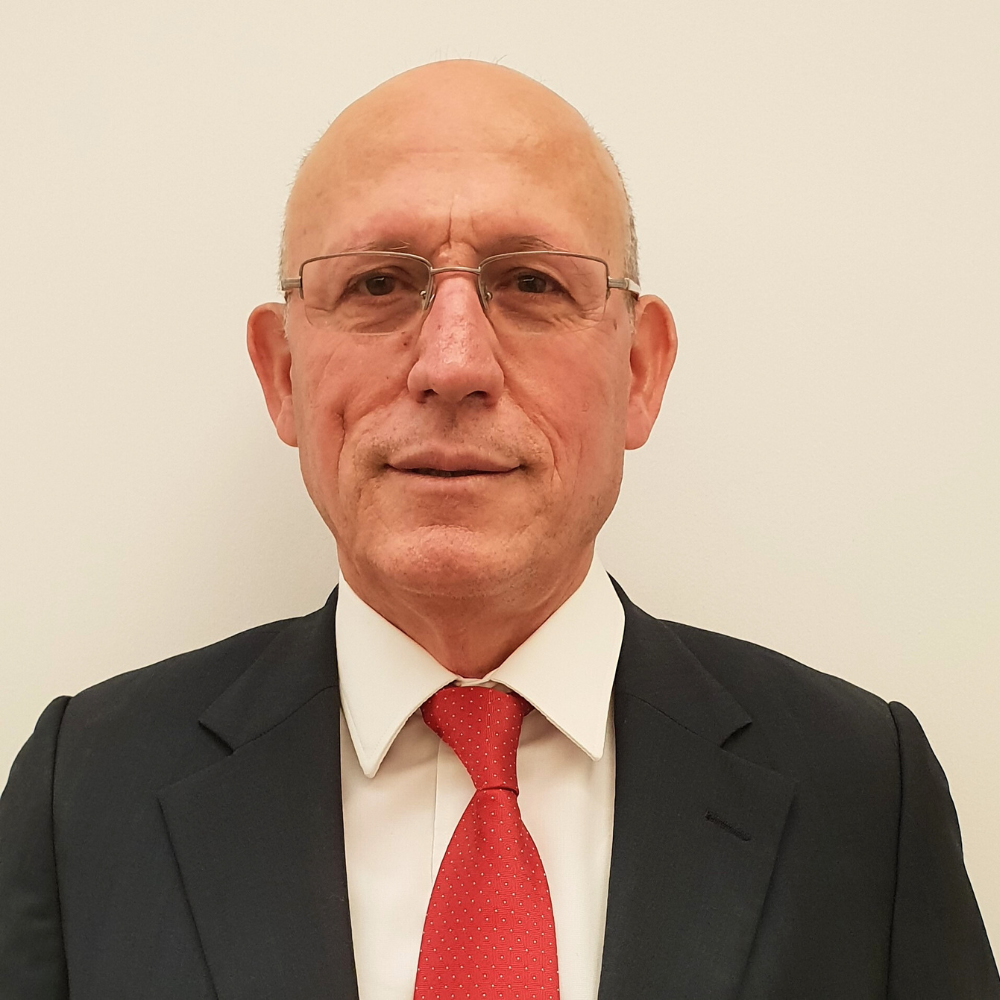
Brig. General (ret.) Shimon Sarid
Strategic Advisor
 

Prof. Radhakant Padhi
Strategic Advisor
 

Reggie Spivey
Strategic Advisor
 

Siba Padhi

2005

CEO & FOUNDER